


Canadian Registration Number(CRN)
Expert CRN Consulting to Certify Your Pressure Equipment Across All Canadian Jurisdictions
The Canadian Registration Number (CRN) is a mandatory design-approval requirement for all pressure equipment used in Canada, including pressure vessels, boilers, piping systems, fittings, and modular skid assemblies. Canada operates one of the world’s most stringent pressure-safety frameworks, built on CSA B51 and supported by ASME and global engineering standards. Because each province and territory maintains its own regulatory authority, CRN approval must be obtained for every jurisdiction where the equipment will be installed, making the process highly technical and often challenging to navigate.
This decentralized system ensures exceptional safety but introduces complexity: even designs that meet ASME codes may require additional stress analysis, material traceability, welding documentation, or compliance clarification before approval. Fittings and proprietary components face even deeper scrutiny, demanding detailed testing and strict quality-control evidence. Without expert guidance, companies often encounter delays, rejections, redesign cycles, and increased project costs.
Kopfkinogroup solves this by providing full-spectrum CRN engineering and regulatory support. Our team reviews your design for CSA B51 and jurisdiction-specific alignment, performs all required ASME calculations and FEA validations, prepares regulator-ready documentation packages, and manages multi-province submissions directly with authorities. We handle every technical query, revision, and clarification until approval is secured. With our deep regulatory insight and engineering precision, we ensure your equipment achieves fast, accurate, and risk-free CRN certification, enabling seamless access to Canada’s highly regulated industrial sectors.
Canadian Registration Number (CRN) – Understanding the Canadian Pressure Equipment Approval System
The Canadian Registration Number (CRN) is Canada’s mandatory system for reviewing and approving the designs of pressure vessels, piping systems, and the fittings that form part of a pressure boundary. Before any pressure equipment can be legally installed or used in Canada, it must go through this regulated design-approval process.
All Canadian provinces and territories—together known as jurisdictions—use the CRN system. While the national standard CSA B51 provides the foundation, each jurisdiction adds its own detailed requirements, interpretations, and documentation expectations, which can make the approval process more complex than it first appears.
It is important to understand that CSA B51 is not a design code by itself. Instead, it works alongside internationally recognized standards such as ASME Section VIII-1, VIII-2, and ASME B31.3, which govern how pressure equipment must be designed and manufactured. CSA B51 adds additional rules that apply specifically to Canada.
Ideally, CRN review and QC acceptance should be completed before fabrication begins, and it is strictly required before the equipment is placed into service. A CRN must be obtained separately for each province or territory where the equipment will be used. Once a design is registered, any number of identical units can be produced, inspected, and installed—no matter where in the world they are manufactured.
Quick Menu
Request a Call Back
Have questions about CRN registration, engineering compliance, or project requirements?
Common Challenges in CRN Registration
Many companies face recurring issues during CRN approval, including:
Fittings require code-based design (often ASME B31.3) and must be manufactured under a qualified quality-control program.
Pressure vessels must meet every rule of the applicable design code, including weld sizes, material selection, inspection openings, and nameplate details.
Review timelines can be long—a full Canada-wide registration may reasonably take several months, especially when multiple jurisdictions are involved.
Specialized CRN knowledge is essential, and not all requirements are published or universally interpreted the same way.
Since designs can be reviewed up to seven times for Canada-wide use, a rejection in one jurisdiction may require redesign and resubmission everywhere—making a conservative approach crucial.
Finding CRN-registered fittings for use in piping or vessel assemblies can be difficult.
Registration fees are significantly higher than National Board or U.S.-based approvals.
Understanding these challenges early is critical when planning projects involving pressure equipment in Canada.
We Provide Complete CRN Solutions for Your Business
At Kopfkinogroup, we simplify the complex CRN approval process with structured engineering

Pre-Submission Feasibility & Code Review

Engineering Calculations & Advanced Analysis
We prepare complete, regulator-ready engineering files including pressure vessel calculations, piping stress analysis, FEA simulations, load cases, material checks, and safety relief calculations.
Every report is formatted to meet Canadian authority expectations.

CRN Documentation & Submission Packages
We assemble full CRN-compliant documentation: detailed drawings, materials, weld procedures, QC plans, stamping details, and testing records.
Our documentation ensures seamless alignment with CSA B51 and jurisdictional rules.

Multi-Province CRN Registration & Liaison
We manage CRN submissions across all Canadian jurisdictions—ABSA, TSSA, TSBC, TSask, Manitoba, Québec, Atlantic regions, and the Territories.
Our team communicates directly with regulators, answering queries and coordinating revisions until approval is secured.
Fittings CRN (Categories A–H)
We provide specialized support for fittings including valves, couplings, regulators, safety devices, machined parts, and custom assemblies.
Our fitting dossiers include testing data, QC program details, code compliance, and material certifications.
CRN Renewals, Modifications & Re-Registration
Whether expanding into new provinces or updating design details, we handle all renewal, revision, and re-registration processes.
Your equipment stays compliant as requirements evolve.
Happy Customers
Trusted clients worldwide who rely on our engineering expertise.
Clients Satisfied
Client satisfaction achieved through quality, precision, and timely delivery.
Projects Done
Successful projects completed across industries with proven results.
Essential CRN Resources
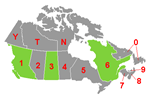
Provincial Contacts & Regulatory Information
CRN Manufacturers (Fittings with CRNs)
Browse a categorized list of fittings that already hold CRN approval. Each entry includes a short product description and a quick link to the manufacturer’s website, along with a helpful FAQ for fast clarification.
Province-by-Province Piping Requirements & Law
Learn which piping systems require CRN registration and which are exempt in each province. Includes flowcharts, legislative excerpts, and valuable links to provincial rules and resources.
Burst Testing (Testing Requirements for CRN & ASME Compliance )
Burst testing is a critical method used to validate the strength and integrity of fittings and pressure components. This section explains testing procedures, limitations, and documentation expectations for CRN submissions.
Deep Dive the CRN System
Frequently Asked Questions
CRN Manufacturers (Fittings with CRNs)
Browse a categorized list of fittings that already hold CRN approval. Each entry includes a short product description and a quick link to the manufacturer’s website, along with a helpful FAQ for fast clarification.
Generic Vessel Registration
Learn which piping systems require CRN registration and which are exempt in each province. Includes flowcharts, legislative excerpts, and valuable links to provincial rules and resources.
CRN Piping Sample
Burst testing is a critical method used to validate the strength and integrity of fittings and pressure components. This section explains testing procedures, limitations, and documentation expectations for CRN submissions.
CRN Reading
CRN Essential Playbook
A curated collection of practical articles that explain how to successfully register pressurized equipment in Canada.

Multiple Ways to Connect
Choose the method that works best for you. We’re committed to responding to all inquiries within 24 hours.
Phone Consultation
Speak directly with our engineering experts to discuss your project requirements and get immediate answers to your questions.
Email Inquiry
Send us a detailed message about your project. We'll respond with a comprehensive proposal and next steps within 24 hours.
On-Site Meeting
Schedule a face-to-face consultation at your facility or our office to discuss complex projects in detail.